
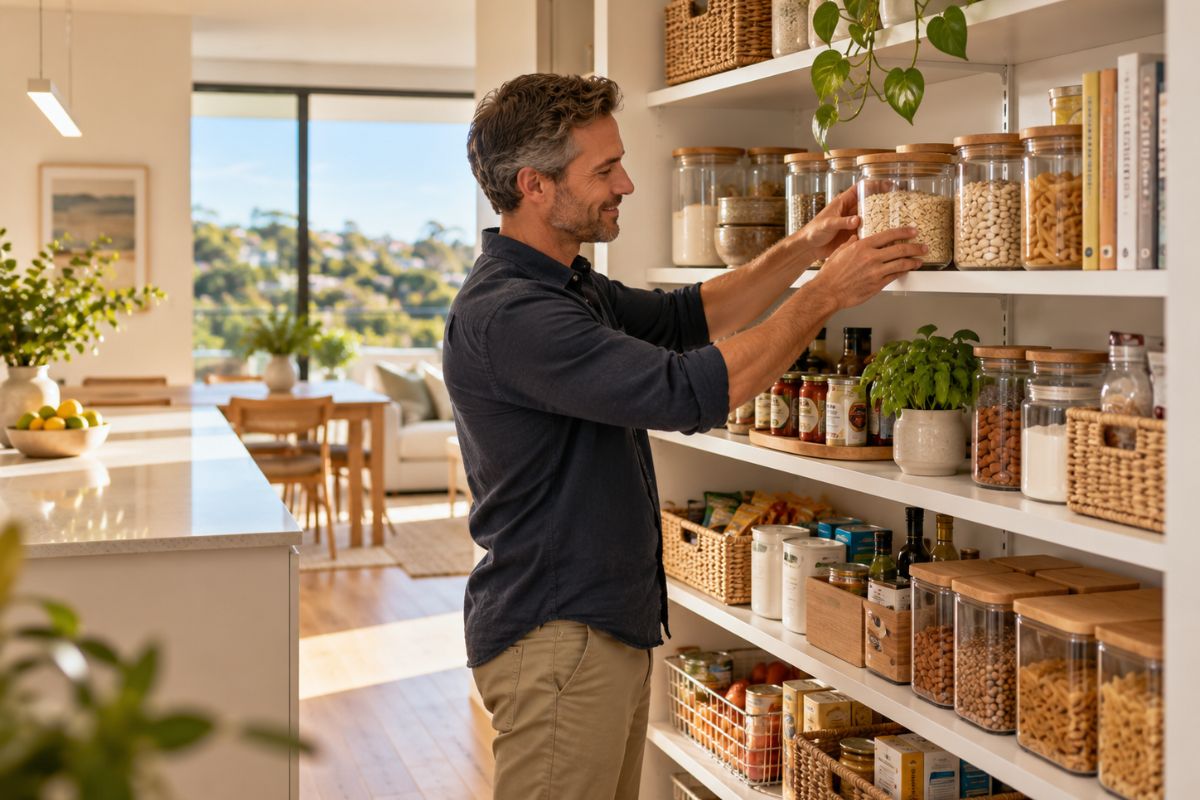
Between school runs, weekend sport and a daily commute, life in The Hills moves fast and the stuff piles up just as quickly. We’ve covered bathroom storage before. This time we’re looking at the whole home and at one simple guideline that makes every storage solution work better: the 80:20 rule.
As local property managers and sales agents, we see the same thing week after week: the homes that feel calm and spacious are those with smart storage and space to spare.
Whether you own a family home in Castle Hill, rent a townhouse in Kellyville or live in a unit in Rouse Hill, here’s how to make every room work harder.
The 80:20 rule: leave a little breathing room
Here’s the idea: use only about 80% of your available storage space and leave the other 20% empty.
This might sound counterintuitive. Why pay for cupboards, drawers and shelves and then not use them? Well, when a cupboard is packed, everything looks crowded even when it’s neat. The same packed cupboard is harder to use because you have to pull things out to find other things and you have no room left for any new purchases. Worse, to a potential buyer, a packed cupboard looks like work and they question whether or not the storage is adequate for their needs.
Leaving 20% free gives you room to move, room to grow and a home that feels effortless rather than stuffed. It’s also a handy decluttering test: if a cupboard is past the 80% mark, something needs to go, be donated or be stored elsewhere.
How to apply the 80:20 rule:
- Open a cupboard, drawer or wardrobe and ask yourself, “Could I comfortably add a fifth more?” If not, it’s time to edit.
- Aim to see a little bare shelf or floor in each space.
- Keep a “one in, one out” habit so you stay under the line.
Why storage matters (to owners, tenants and buyers)
When we open a home for inspection, buyers and tenants don’t just look at the floor plan. They open wardrobes, check the linen cupboard and peek into the laundry. Enough storage says “easy living”. Too little (or cupboards crammed so full that doors barely close) makes rooms feel smaller than they are.
For sellers, good storage sells and the 80:20 rule is one of the easiest ways to show it off. A wardrobe that’s about 80% full tells buyers there’s plenty of room for their own belongings. A jammed one tells them the opposite, even if the two cupboards are exactly the same size. For landlords, well-kept, practical properties tend to appeal to tenants who look after them.
Bedrooms: use the space you can’t see
Under-bed storage is often the most underused space in the house. Low-profile drawers or lidded boxes on wheels suit out-of-season clothes, spare linen and shoes. Leave a little slack in each box so lids close easily and things don’t get crushed. If you’re buying a new bed, consider a base with built-in drawers or a gas-lift ottoman. Our top tip: Measure the maximum height for under-bed storage containers before you head to Ikea or Kmart.
Wardrobe add-ons like hanging organisers, shelf dividers and double-hanging rails can nearly double what a standard wardrobe holds, with no tools or damage. If you’re struggling with hanging space, try some multi-hangers. Be warned: you will be tempted to hang things you’d never hung before. Resist the urge to fill every inch. If you can’t slide a hanger along the rail without a fight, you’re over the 80% limit.
Wardrobe shelving is versatile. Use baskets for clothing to keep the shelves looking neat. Fold items like jeans and t-shirts into baskets so they stack vertically. You’ll fit more in and be able to see what you have at a glance. Another slightly quirky idea is to use an old wine rack to store your jeans or other trousers. The beauty of this method is you’re limited to the number of pairs of jeans by the number of slots.
Bedside tables with drawers. Choose ones with a drawer and a shelf instead of an open top so chargers, books and other odds and ends stay out of sight. Keep them lightly filled so the drawer glides easily.
Storage ottomans or chests: These are handy at the end of a bed, in an entry or as extra seating and they hide toys, blankets or clothes in seconds. You can also use ottomans for throws or off-season décor. Use a storage chest for nested suitcases or seasonal clothing. Leave enough room to toss something in without a wrestling match.
Living areas: double-duty furniture
Coffee tables with storage. A lift-top or shelved coffee table keeps remotes, throws, kids’ games and magazines close but hidden. It’s one of the easiest wins in a family room. Stick to the 80% level and it stays tidy and easy to use rather than becoming a black hole. If you want to go the extra mile, add storage containers within the main storage to keep items in their categories. If you don’t want to actually buy smaller containers, repurpose old shoe boxes or other containers that will do the job.
Room dividers with shelves. In open-plan homes and units, a shelving divider creates a “zone” such as a study nook, a play area or a separate dining space and adds display and storage at the same time. This is where the 80:20 rule really shines: leave some shelves partly empty or lightly styled so the divider still feels open and airy. Choose an open-back design to keep light flowing and secure taller units properly.
TV units and sideboards. Closed cabinets beat open shelving when you want a clean look. Baskets inside make it easy to sort by family member and a little spare room means you’ll never have to cram the latest game console in.
Kitchen and pantry: think vertical. Modern kitchens tend to have cupboards that are too high to have just one layer. Here’s how to manage them.
- Tiered shelves and risers stop things getting lost at the back of the cupboard.
- Clear, stackable containers keep dry goods fresh and let you see what’s running low.
- Door-mounted racks are great for spices, wraps and cleaning products.
- Hooks and rails free up drawer space for mugs, utensils and pans. If you’re renting, check with your property manager before fixing anything permanent.
The pantry is the perfect place to test 80:20. If you can see every item at a glance and still have space to add the weekly shop, you’ve got it right. If you’re stacking tins three-deep, it’s time for a clear-out.
Bathrooms
For owners, add a shelf above the door for a quick storage solution that complements your existing bathroom storage. Add some baskets and use the space for spare towels, toilet paper or to add some greenery. You can read more about bathroom storage here.
Laundry, garage and outdoors
Laundry. Over-the-machine shelving, wall-mounted drying racks and slim rolling trolleys can help you make the most of tight spaces. Leave a gap on the shelf for the detergent you haven’t bought yet.
Garage. Many Hills homes have generous double garages and they fill up quickly. Wall-mounted racks, heavy-duty shelving and ceiling storage for seasonal items can bring your parking spot back. Aim to keep about a fifth of the shelving and floor space clear so you can move around safely and find things. Store paint, chemicals and gas bottles safely and according to their labels.
Balconies and courtyards. For unit and townhouse living, a weatherproof storage bench or deck box keeps outdoor cushions and gardening tools tidy. If you’re in a strata scheme, check your by-laws about what can be kept on balconies.
Unit storage cages. Many apartments come with a lockable basement cage. Use tall, narrow shelving to maximise the height and label your boxes. Leave a clear walkway to the back so you can reach everything without unpacking the whole cage.
Storage tips for renters
Most of these ideas are freestanding, which makes them ideal for rentals. The 80:20 rule also helps at routine inspections, because tidy, uncrowded cupboards show a property is well looked after. If you’d like to fit shelves, hooks or anything that involves drilling or fixing to walls, please ask your property manager first and get approval in writing. We’re happy to talk through options.
For any tall furniture such as bookcases and room dividers, anchoring to the wall is an important safety step, especially in homes with young children. Just check with us before you do it.
Storage tips for sellers
- Thinking of selling? Before your first open home:
Apply the 80:20 rule to every cupboard. Buyers open them. Shelves that are about 80% full show off the space without looking bare. - Clear the garage and storage areas so buyers can see their true size.
- Use consistent, tidy storage such as matching baskets and boxes for a calm, styled look.
- Show off built-ins. If your home has a walk-in robe, linen press or a well-fitted pantry, make sure it’s clean, bright and easy to see.
- Talk to us about what to keep, store or move. Sometimes a short-term storage unit for surplus furniture makes a big difference to presentation.
Ready to make more of your space?
Whether you’re renting, buying, selling or just fed up with the clutter, storage is one of the simplest ways to improve how a home feels and functions. Combine smart storage solutions with the 80:20 rule and you’ll have a home that looks bigger, feels calmer and is easier to live in. If you’d like advice on presenting your property or want to know what tenants and buyers in The Hills are looking for right now, get in touch with our team. We’d love to help.
Thinking of selling or need selling advice in The Hills?
We have buyers looking for homes in Rouse Hill, Beaumont Hills, Box Hill, Kellyville, North Kellyville and Tallawong. As established real estate agents, we’re here to help. Get in touch today by calling us on 02 8883 0777.
